
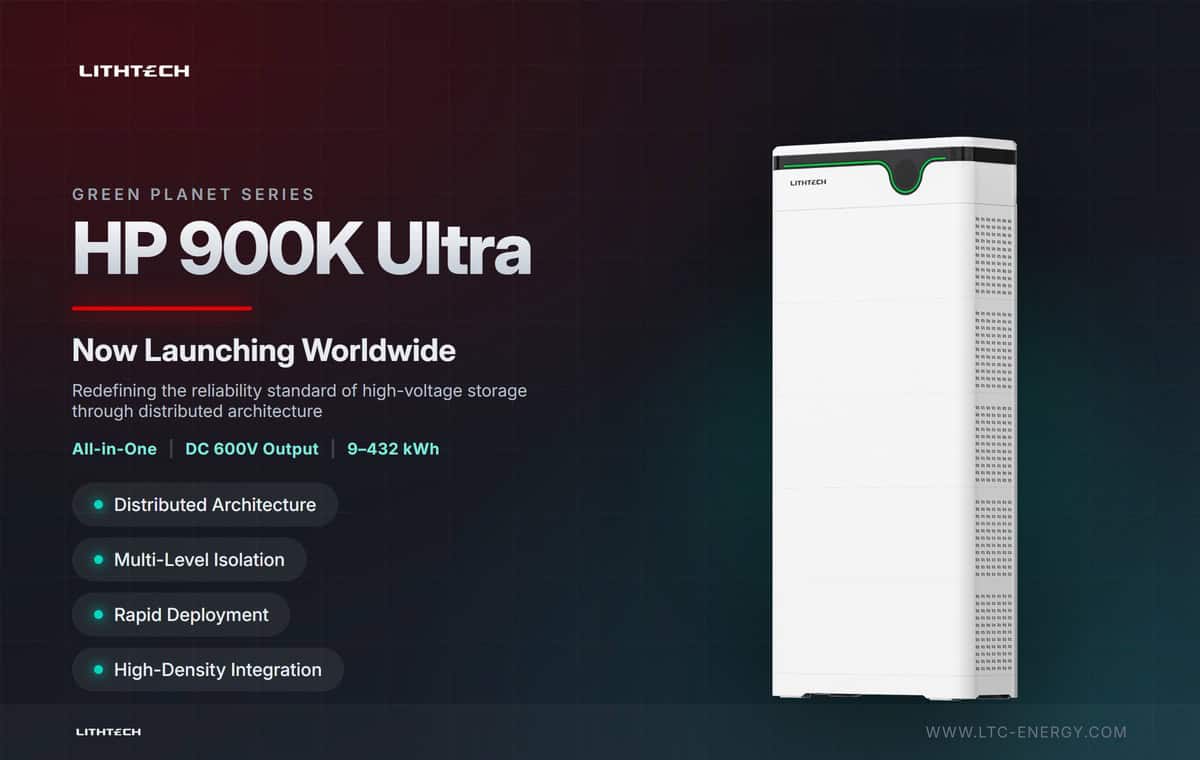
The global residential solar-plus-storage market is shifting gear. Systems installed in the early years are now reaching the point of expansion or replacement, and new installations are being held to higher standards of reliability, deployment efficiency and lifetime return.
The constraint comes from the architecture itself. In the centralised series architecture used across most of the industry, every battery unit sits in a single circuit and is charged and discharged together. Usable capacity is therefore governed by the unit in the poorest state of health — old and new batteries cannot easily coexist during an expansion, and a single anomaly can bring down the whole system.
The answer of the Lithtech HP 900K Ultra is to replace the architecture itself.
Every battery module integrates its own high-power DC-DC + BMS unit (4 kW output). The system is no longer one series circuit, but a set of independently managed energy units operating in parallel. This is a migration from a centralised to a distributed architecture, and it is the technical origin of everything else in this product.
It is also more than a set of batteries. A PV hybrid inverter, a storage PCS, EMS energy management, a DC charging gun and a V2G module are integrated into the same machine — this is an All-in-One storage system, with a unified DC 600V output on the DC side.
1. Architecture · Distributed and Autonomous
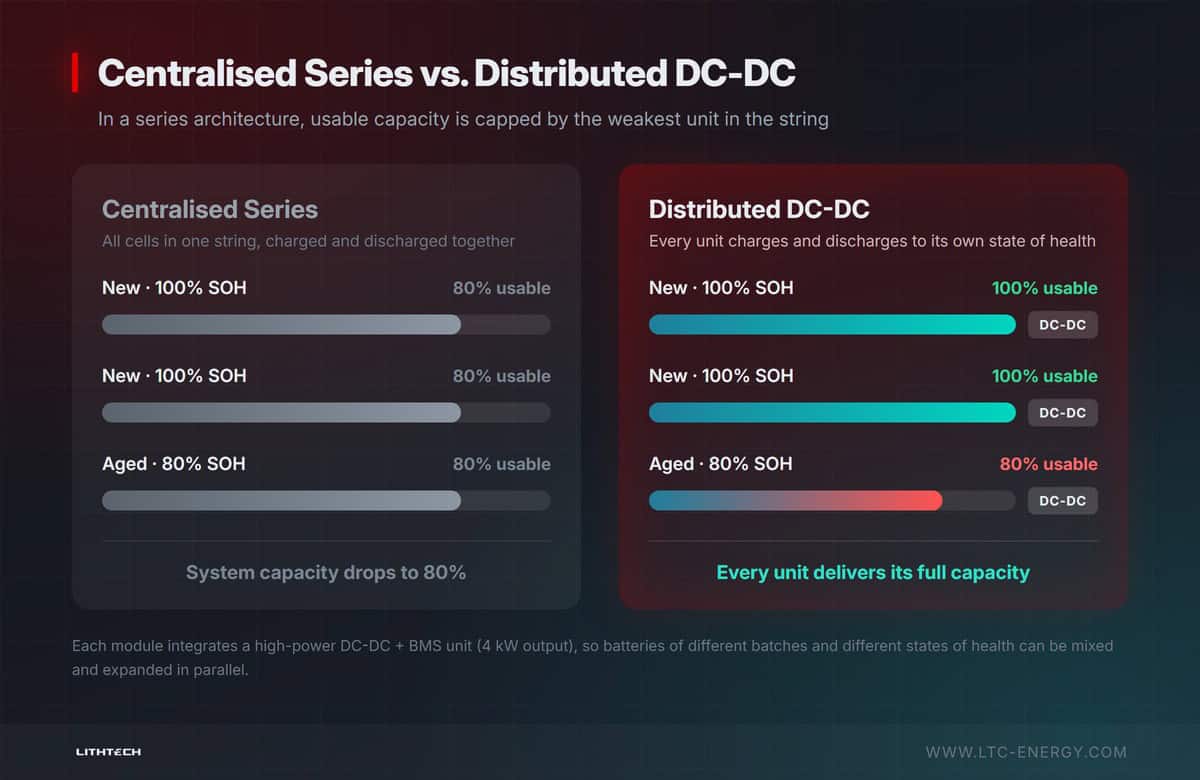
In a centralised series architecture, if one of three modules degrades to 80%, the usable capacity of the entire string is levelled down to 80%. This is the weakest-link effect of an energy storage system.
The distributed DC-DC architecture rewrites that logic: each unit has its own voltage and current regulation, takes part in charging and discharging according to its own state of health, and is not held back by the others. Three consequences follow.
First, capacity expansion is no longer limited by batch or state of health. Batteries of different batches and different states of health can be installed and paralleled together, so existing investment carries forward and there is no need to replace the whole set in order to expand.
Second, the entry point of the system drops to a single module. One module with a PDU and a base forms a complete, working system of 9.043 kWh, which can then be expanded step by step as load grows.
Third, the connection is made on the DC side, with no inverter brand lock-in. Built on a pure DC-side DC-DC architecture with a rated DC 600V output, the system works with most mainstream high-voltage storage inverters on the market. The access conditions are simply a 600V DC bus, CAN or RS485 communication and pure DC coupling — an installer can check those against the specification of the unit already on site. An existing PV system can therefore add storage without replacing its inverter.
2. Multi-Level Isolation · Safety Redundancy
The value of safety shows not while a system is running normally, but at the moment something goes wrong.
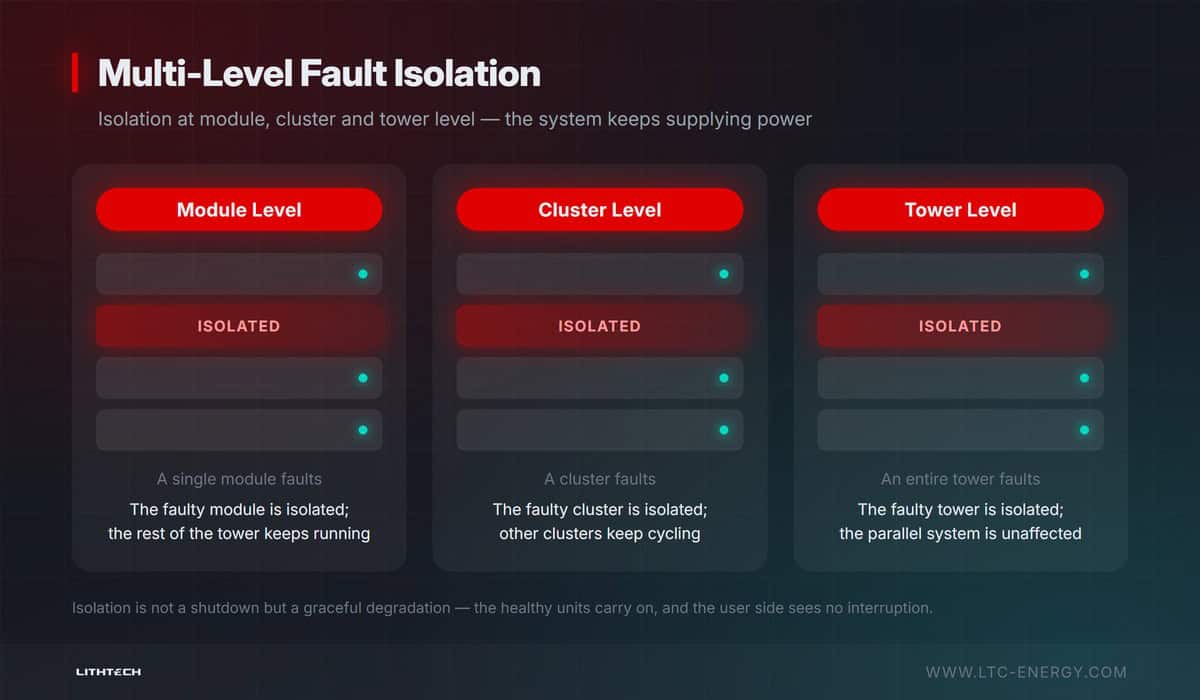
The HP 900K Ultra supports fault isolation at module, cluster and tower level. Once an abnormal unit is isolated, the system runs in a degraded mode — the remaining units carry on charging and discharging, and the supply is not interrupted.
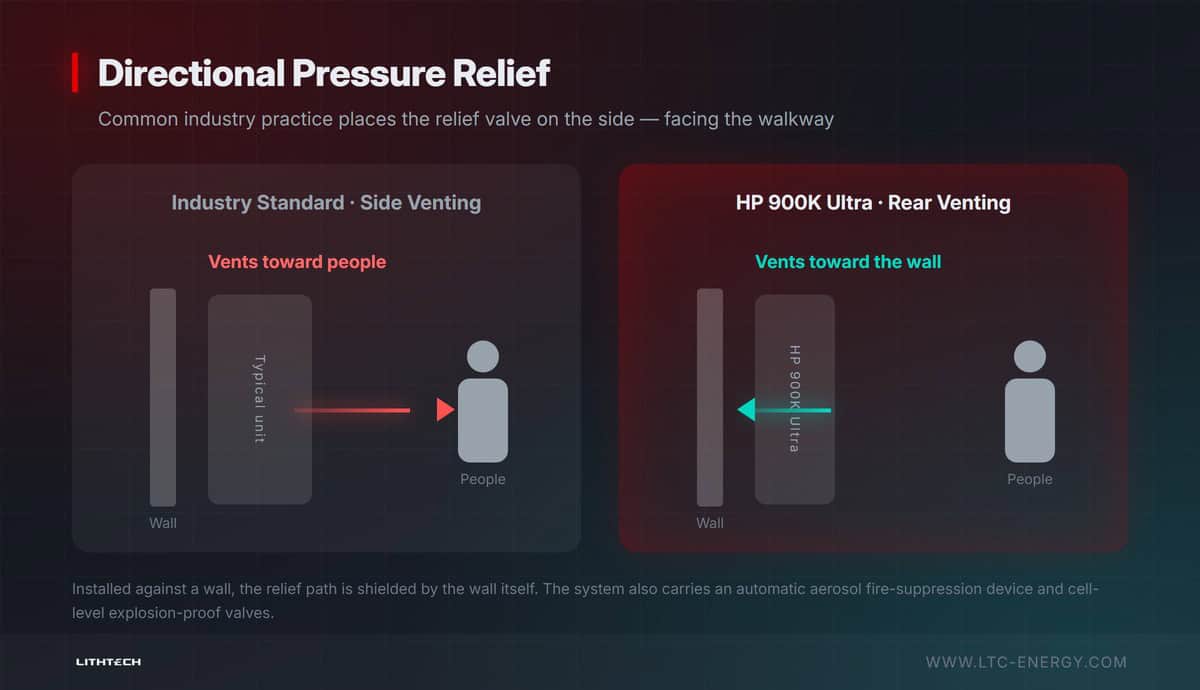
Common industry practice places the relief valve on the side of the enclosure, and that side normally faces the area where people walk. The HP 900K Ultra moves the relief valve to the rear; installed against a wall, the relief path is shielded by the wall itself.
The system also carries an automatic aerosol fire-suppression device and cell-level explosion-proof valves. It uses 314 Ah LiFePO₄ cells with a cycle life of ≥8,000 cycles (100% DOD @ 25°C), an ingress protection rating of IP66, an aluminium enclosure rated to C4 corrosion protection, and a 10-year warranty on the complete system. The product is engineered to international safety standards including IEC 62619 and IEC 62477; certification is in progress.
3. Minimal Deployment · Efficient Delivery
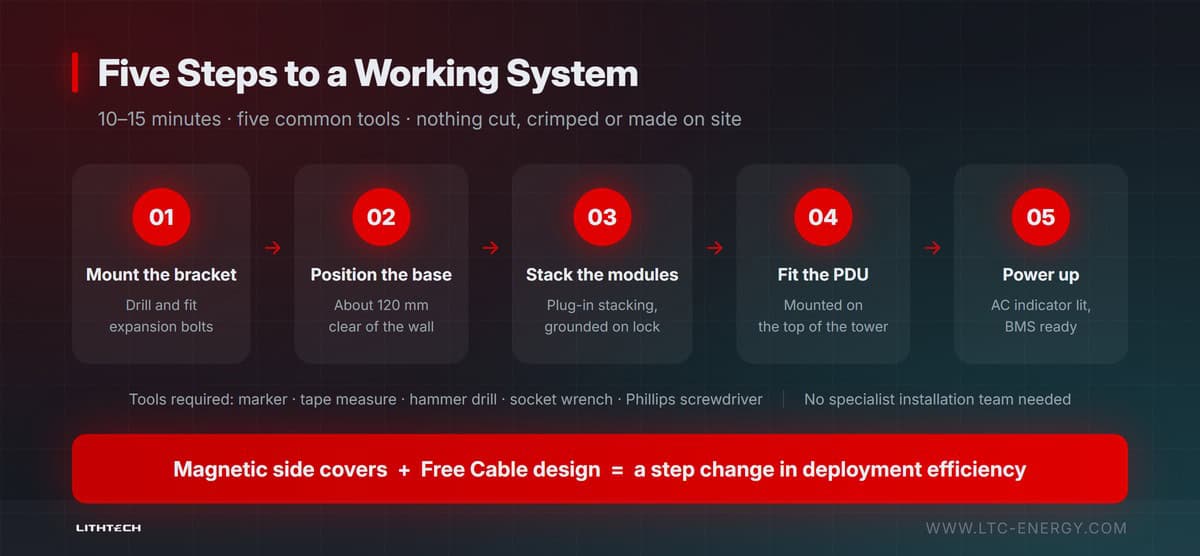
Deployment efficiency bears directly on the cost structure of a project.
A complete system is deployed in 10–15 minutes, with nothing cut, crimped or made on site. Three structural design decisions support that figure:
- Magnetic side covers — no screws to open or close, and no tools needed for maintenance
- Free Cable design — built-in quick-fit terminals remove the on-site cable-making step altogether
- Plug-in stacking structure — modules plug together vertically, completing the electrical and the communication connection in one movement
A marker, a tape measure, a hammer drill, a socket wrench and a Phillips screwdriver — five common tools complete the entire job, with no specialist installation team required.
4. High-Density Integration · Space Efficiency
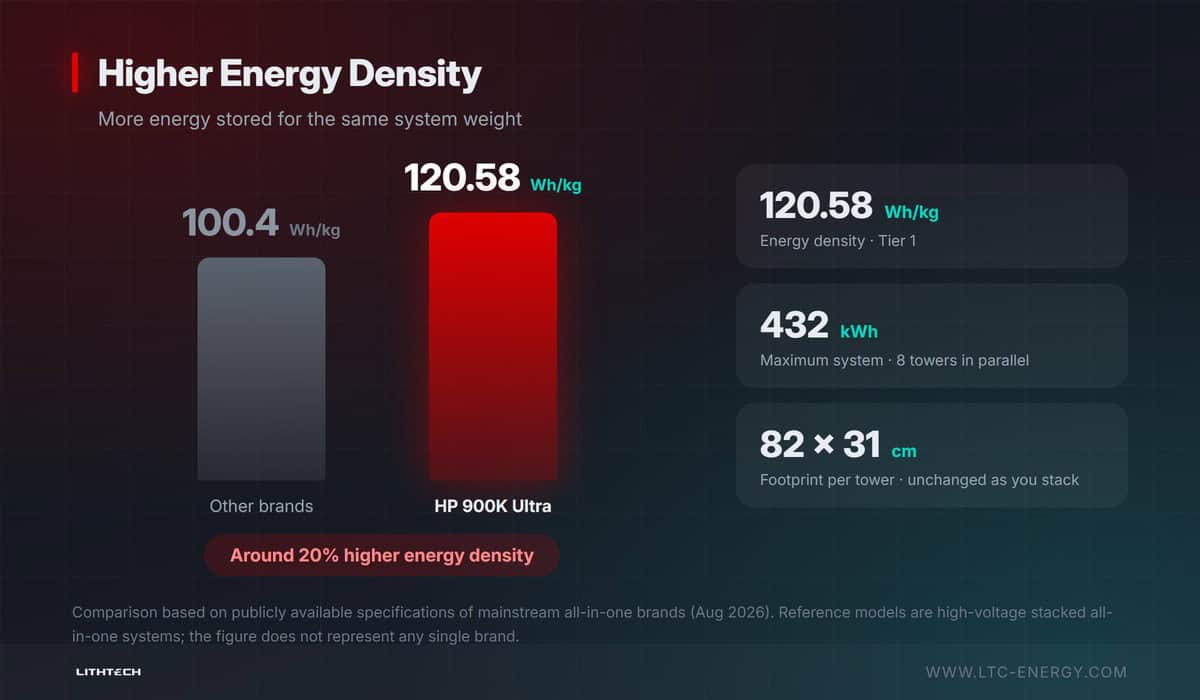
Energy density is 120.58 Wh/kg, at the Tier 1 level of the industry. Measured against publicly available specifications of mainstream all-in-one brands, that stores around 20% more energy for the same system weight.
A single tower occupies 82 × 31 cm, and that footprint does not change as capacity is added: one tower stacks up to 6 modules, from 9.0 to 54.3 kWh, and up to 8 towers can be paralleled for a system capacity of up to 432 kWh.
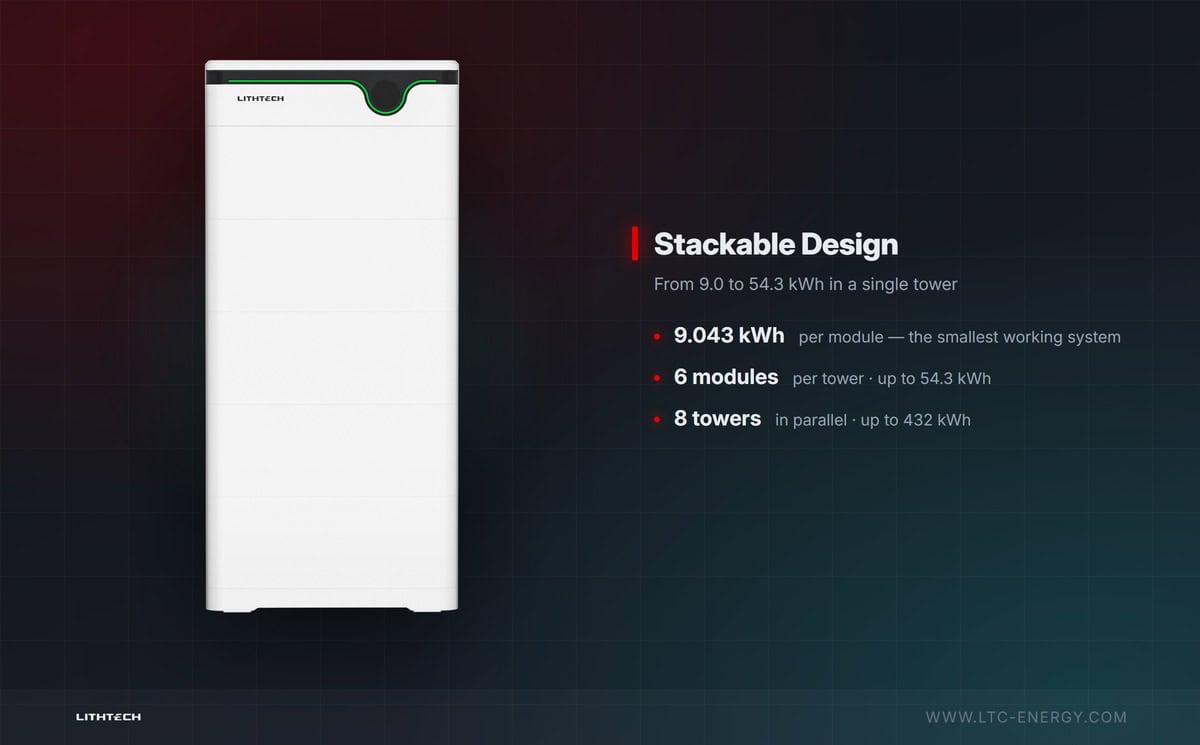
In residential and commercial sites where space is tight, a higher storage capacity can be deployed within the same footprint.
5. All-in-One Integration · A Closed DC Loop
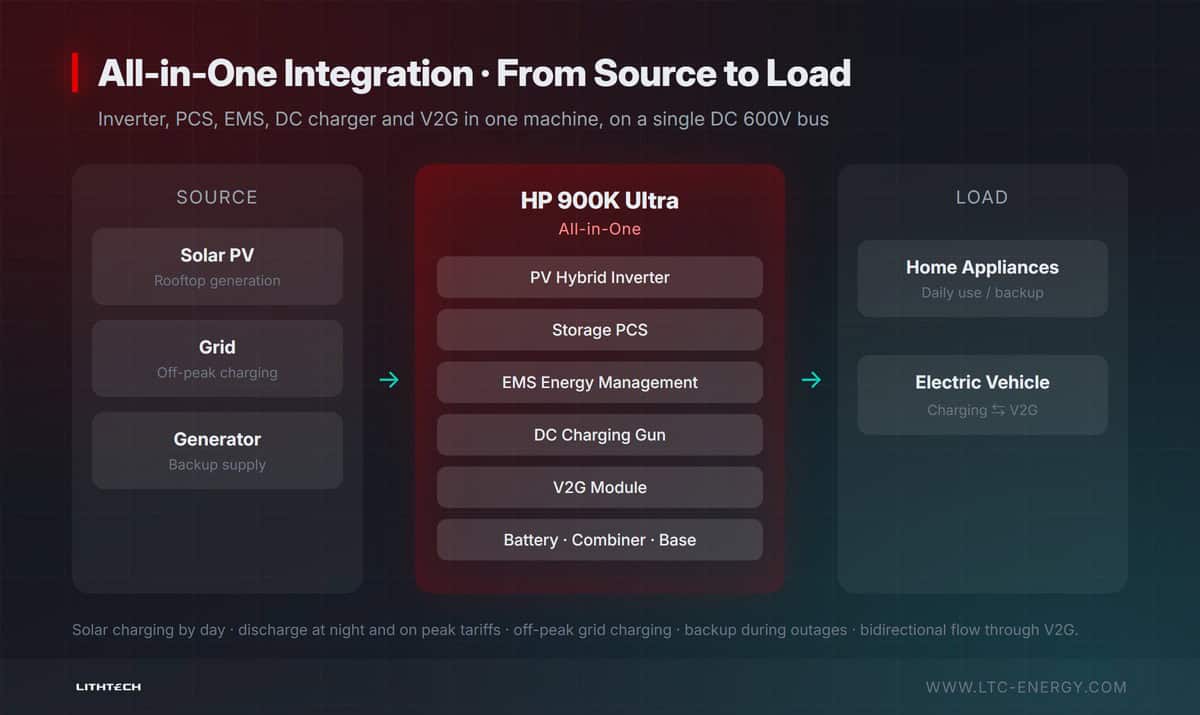
The HP 900K Ultra uses an All-in-One design that brings the PV hybrid inverter, storage PCS, EMS energy management, DC charging gun and V2G module into a single system, with a unified DC 600V output on the DC side.
Its position in the energy chain changes accordingly: sources such as solar, the grid and a generator connect directly on one side, while household loads and electric vehicles are supplied directly on the other. Storage is no longer a device appended after the inverter, but the dispatch centre of the household energy system.
During the day, solar supplies the load first and charges the system; at night and through peak tariff periods it supplies the load; off-peak, it draws from the grid; when the grid fails it switches to backup operation; and through V2G it allows energy to flow in both directions between the vehicle and the system.
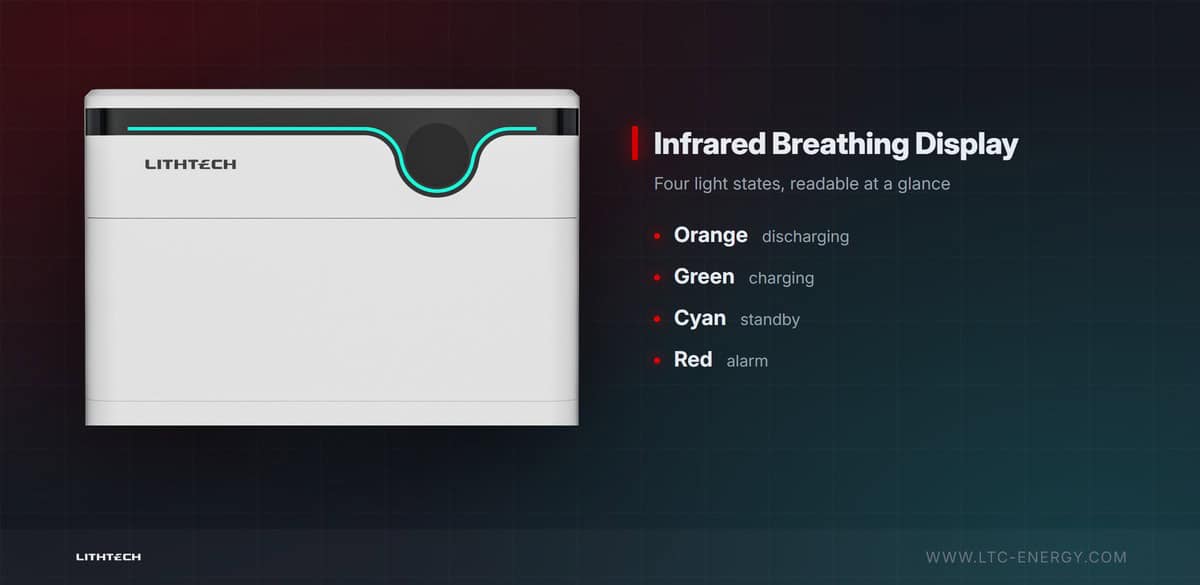
The product carries an infrared-sensing breathing display that shows system status through four light states — orange for discharging, green for charging, cyan for standby and red for alarm. The discharge temperature range is −20°C to 60°C, and an FPC heating film lets the system self-heat and start in low-temperature environments.
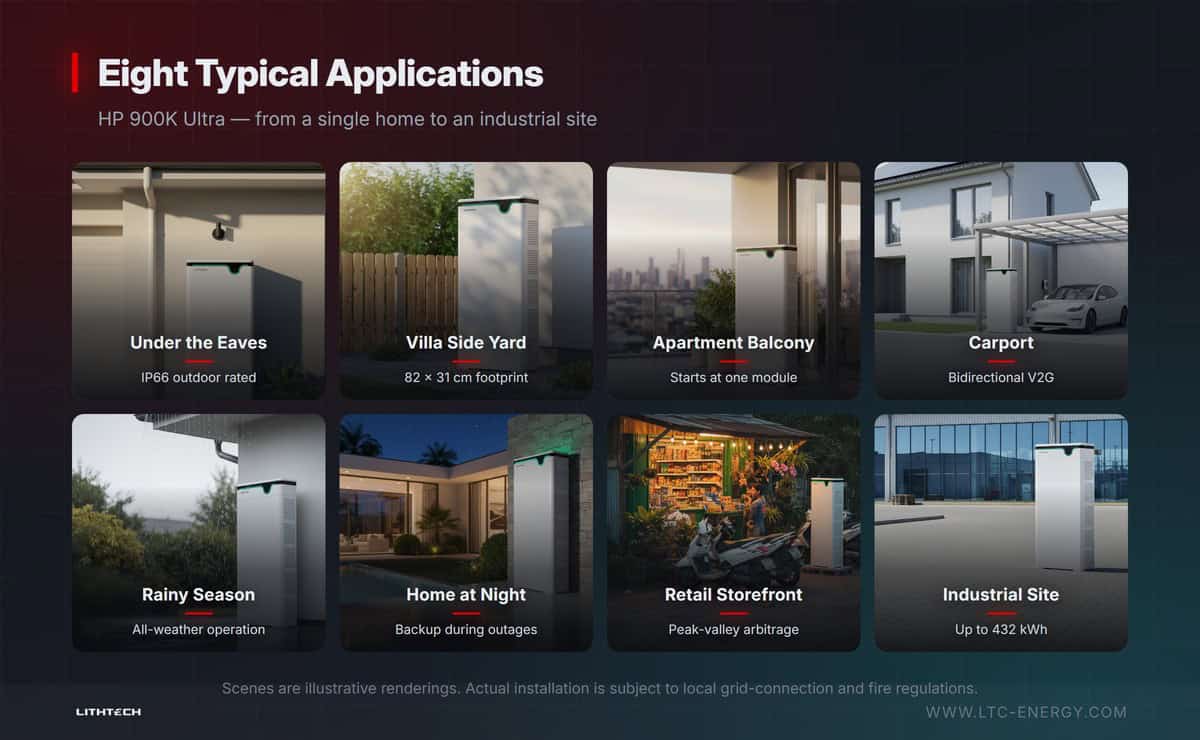
From under the eaves of a house to an industrial site, one architecture covers every scenario in different capacity configurations: start with a single tower, parallel more towers, and let the configuration follow the requirement.
Conclusion
As storage moves from an option to a piece of infrastructure, architecture becomes the decisive variable.
Over the past decade, residential storage answered the question of whether it was available at all. Over the next decade, the question is whether it can keep running. Whether a system can operate safely for ten years, whether it can grow as load grows, whether it can keep driving down the cost of deployment and maintenance — a specification sheet cannot answer those three questions. Only architecture can.
The PV inverter industry travelled the same road: from central to string inverters, the granularity of control moved from an entire plant down to a single string, and generation efficiency and availability across the industry rose a level as a result. Storage is standing at the same junction.
For the user, storage is no longer a fixed asset bought once, but an energy infrastructure that can grow with demand. For the industry, the measure of a storage system is moving from how high its specifications are, to how long its architecture will hold.
The Lithtech HP 900K Ultra is now released to the global market.
Distributor and installer enquiries are welcome.
LITHTECH
www.ltc-energy.com|in**@******ec.com
